anthony galvin


Pictures from stage 18, the time trial at Annecy.
2009-07-25 16:26:00 GMT permalink
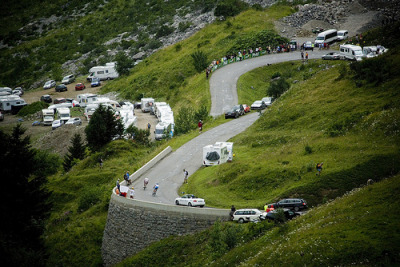
Pictures from stage 17 at the top of the Col de la Colombiere.
2009-07-25 16:25:00 GMT permalink
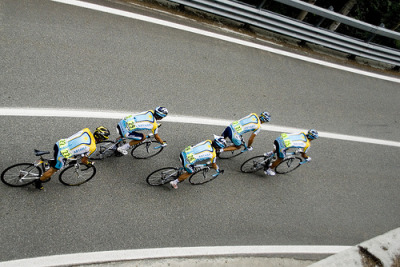
Pictures from stage 16 at Pre Saint Didier.
2009-07-25 16:24:00 GMT permalink
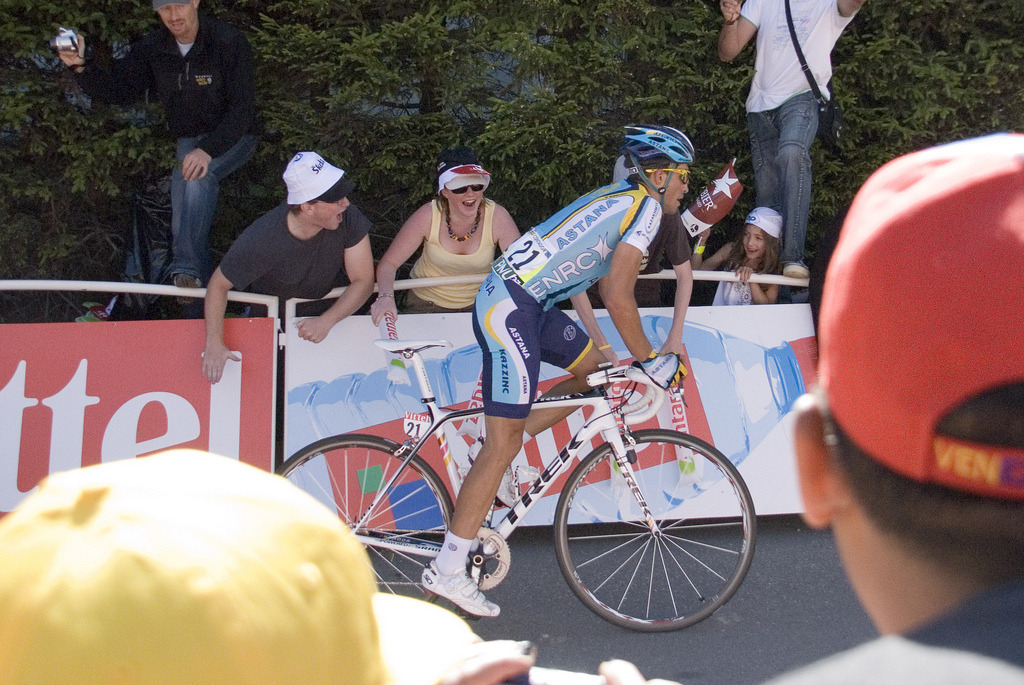
Pictures from stage 15 as Le Tour climbs up to Verbier.
2009-07-20 13:12:00 GMT permalink

Chapeau! New post on Soho Breakfast phto blog.
2009-07-12 21:53:00 GMT permalink
Ryan's Daughter (1970) - a short review
A critical failure on it’s release in 1970, David Lean’s follow up to Lawrence of Arabia is an unusual and beguiling film. Robert Bolt’s screen play reworks Madame Bovary to occupied Ireland in 1916. The star studded cast includes Robert Mitchum, Trevor Howard and John Mills. Sarah Miles is the ‘daughter’ of the films title, the emotional heart of the film as Rosy Ryan/Emma Bovary. However, it’s the scenery and dramatic west of Ireland coastline that dominates the film.
Shot on Super Panavision 70, by Lean’s cinematographer Freddie Young, the rugged coastline of the Dingle Peninsula is both beautiful and sinister. More than just a backdrop, the coves, castles and storms play an important narrative role in the film. The vast beach at Inch (now one of Ireland’s leading surf spots) is the setting for many of the films most important scenes. The film was nominated for 4 academy awards, winning 2 Oscars for John Mills, Best Supporting Actor and Freddie Young, Best Cinematography. If the Oscars had a category for best supporting scenery then the film would easily have won another.
Whilst the plot centers around the relationships between the Rosy and her lovers, the emotional heart of the film is the relationship between Miles’ character and reality. Her perception of love and life are so at odds with the day to day reality of living in a poverty stricken village that she exists in a parallel dream world, only occasionally visiting the mundane struggle of daily existence. Sarah Miles’ portrayal of this vibrant yet troubled and dislocated woman is excellent, her vivacity smashing onto the rocks of Mithcum’s taciturn school teacher who, although initially seems emotionally literate, sinks into a sullen silence in the face of his wife’s infidelities.
The film was much criticised on it’s release and seen by various interested parties as a critique of the Easter rising and the church’s dominant role Ireland. However, to read the film in this way is surely to see this subtle and complex film as a simple piece of agit-prop. Such a view also underestimates Lean as a film maker who makes great use of the location and cast. Audience attitudes to Ireland and the central characters have changed considerably in the 30 years since the film was made, in some ways this highlights the strengths of the film rather than undermine it.
2009-06-28 15:37:00 GMT permalink
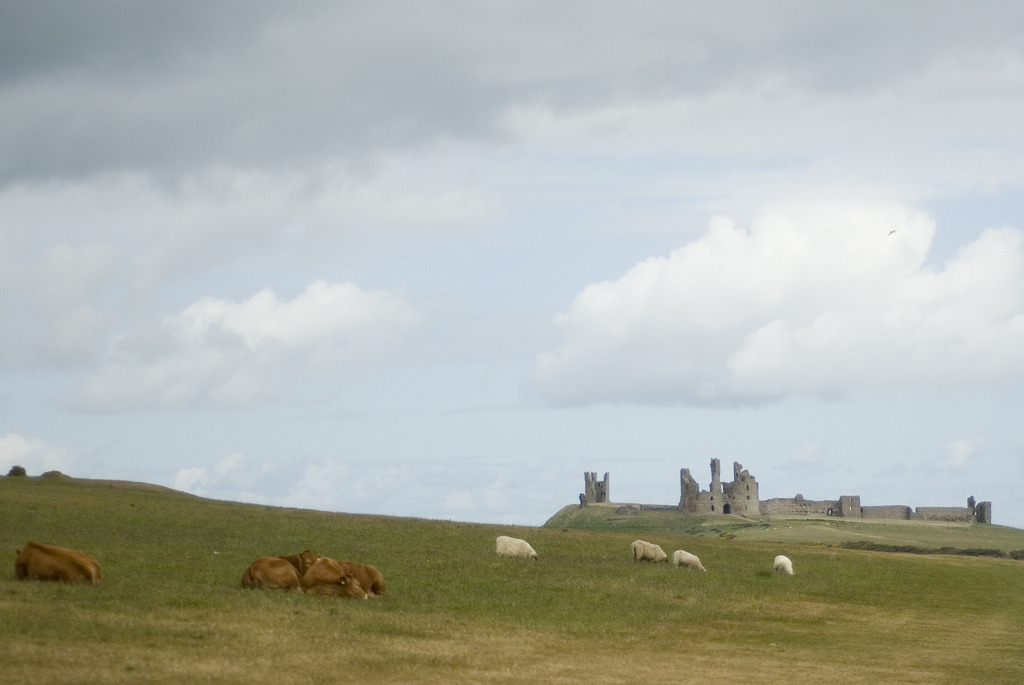
Dustanburgh Castle, more pics on Flickr.
2009-06-18 21:50:00 GMT permalink
Head in the cloud
This post originally appeared on the Altogether Digital blog.
Last year at the <HEAD> conference I was fortunate enough to catch Simon Wardley’s excellent presentation on open source and ‘cloud computing’. It was interesting and engaging, but didn’t really seem to be something that the technical team at Altogether could really utilise - the projects we were working on didn’t appear to need ‘the cloud’.
A few months later, and although the sun is shining on Great Portland Street we are happily working ‘under a cloud’.The concept of cloud computing has been around for a while and there’s plenty of definitions and not a little controversy about whether some of the larger cloud players are really providing a silver lining. I don’t think the team here at Altogether is that hung up on a formal definition of ‘the cloud’, we just like effective solutions that work for our clients. However, as a broad definition: Cloud computing is a way of virtualising data in order to provide a specific performance benefit. The performance benefit may be the ability to provide a rapidly scalable hosting environment or fast access to rich content using edge served data.
Earlier this month Ciaran blogged about how Altogether were working with Kleenex to produce a Twitter based hayfever map of the UK. What he didn’t mention was that as the campaign progressed it was picked up by the press and traffic to the site started to increase pretty rapidly. In order to keep up with the demand for the service we simply moved some of the data storage out into the cloud, in this case Amazon’s S3 service. In Amazon’s words S3 provides “a simple web services interface that can be used to store and retrieve any amount of data, at any time, from anywhere on the web”. Or in our words, the site stays up and performs well.
Whilst the hayfever sufferers have been keeping a sore eye on Twitter, we’ve also been working with Vertu on their new global website. The site has lots of content including rich video and some hefty photography, all delivered in 7 languages. There’s a lot of data flying around. To improve the performance of the site we’ve been working with Akamai who provide ‘edge serving’ technology, which is basically a way of putting the content nearer to the customer - in Akamai’s case on 48,000 servers in 70 countries.
In both cases there’s some pretty geeky stuff happening, which to some people is pretty exciting in itself, but what’s more important is that we have another tool in our digital armoury that ensures the solutions we deliver for clients stay online and perform well, whatever the weather.
2009-06-18 15:25:00 GMT permalink
Film binge - the menu
Looks like I’m about to start on a small film binge over the next few months. Here’s what I’ve queued up:
Aaltra (2004)
Man on Wire (2008)
My Winnipeg (2008)
Ryan’s Daughter (1970)
Saint Etienne - Finisterre (2005)
Uzak (2002)
Belleville Rendez-vous (2003)
Bicycle Thieves (1948)
Big Wednesday (1978)
Helvetica (2006)
Jules Et Jim (1961)
Subway (1975)
The Endless Summer (1964)
The Getaway (1972)
The Man Who Knew Too Much (1934)
Wild Strawberries (1957)
An Inconvenient Truth (2006)
Beckett On Film (2004 - 4 discs, 19 films)
Blindness (2008)
South (1919)
The Lost Weekend (1945)
The Grocer’s Son (2009)
Breaking Away (1979)
Gerry (2002)
Hell on Wheels (2006)
Looking for Eric (2009)
2009-06-09 12:03:00 GMT permalink

Lifes a beach. 1800 miles of driving, lots of walking, some cycling and one haggis. More pictures from Harris and Lewis on Flickr.
2009-06-01 22:06:00 GMT permalink